Advanced Tree Care Services

Tree care service at its best!

(847) 587-8500
  • Home
  • Contact Us
    • Schedule a Quote
  • Our Customer Center
    • Pay Your Bill
    • Customer Login
    • Schedule a Quote
    • Verified Contractors
  • Services
    • Tree Removal
    • Plant Health Care Services
    • Tree Trimming and Pruning
    • Stump Grinding
    • Emergency Tree Care Services
  • About
    • Service Locations
    • Customer Testimonials
    • Our Team
    • News
  • Careers

When to Water Your Trees — and When to Stop

April 20, 2026 by Sofiia Protasova

Here’s something we see every spring as ISA-certified arborists in Lincolnshire: more trees are damaged by too much water than too little.

If you have a sprinkler system, there’s a good chance it’s quietly stressing your trees — even while your lawn looks great.

Water at 7–9 AM. Not midday. Not at night.

Morning is the only time that makes real sense.

The soil absorbs what it needs, and the surface dries naturally through the day. No wasted water, no moisture sitting on bark overnight.

Midday — most of the water evaporates before it reaches the roots.

You’re paying for water your trees never receive.

After 7 PM — moisture sits on bark and soil all night with no sun to dry it. That’s how fungal problems start. Damping off, fungal spots, rust, rhizosphaera needle cast, leafspot, powdery mildew — we diagnose these in Lincolnshire trees every season, and evening watering is almost always part of the story.

If you missed the morning, 5–6 PM works — there’s still enough light and warmth for things to dry before dark.

Your sprinkler system is built for your lawn, not your trees

This is the conversation we have with homeowners more than almost any other.

Lawn grass needs frequent, short watering cycles. Trees need deep, infrequent soaks. When your irrigation system runs the same schedule for both, your trees are getting hit at the base three or four times a week — far more than they need.

Watch especially for water spraying onto plant material. Sprinkler systems spraying arborvitae and spruce directly is one of the most common causes of needle cast and fungal decline we see in this area.

Rust and Rhizosphaera needle cast in particular are largely irrigation-driven diseases — and they almost always trace back to heads that were never adjusted as the trees grew.

Signs your irrigation is harming your trees:

Yellowing leaves despite the tree looking otherwise healthy Soil around the base that never fully dries out Moss or algae on the bark near ground level White mushrooms appearing at the base in a pattern around the root zone — this is where root rot lives. By the time you’re seeing mushrooms, the damage is already underway, and the cause is almost always water that had nowhere to go Leaves wilting even though the soil is wet — this is mushy roots from root rot, not drought.

Older systems — a common problem in our suburbs

Many homes here have irrigation systems that are 15–30 years old. The heads were aimed at open lawn when they were installed. Since then, your trees have grown — but the heads haven’t moved.

Five things to check right now:

-Run every zone and watch it. Walk the yard while the system runs. Look for heads with water spraying onto plant material, stuck rotary heads, and pooling water that isn’t absorbing.

-Redirect heads near trees. Most heads can be adjusted without replacing them. Keep water on the lawn, away from trunk bases and foliage.

-Separate your schedule if you can. Trees once a week, deeply. Lawn two to three times a week, shorter. If your system can’t run separate zones — favor less frequent for everything.

-Check your run times. Illinois spring lawns typically need 20–30 minutes, once or twice a week. If your system is running daily from a schedule that was never updated — that’s too much.

-Add a rain sensor. Older systems often don’t have one, or it’s failed and bypassed. A basic sensor costs under $30 and stops your system from running the morning after it rained.

Do’s and Don’ts: Watering Trees the Right Way

Water deeply and infrequently — once a week at the drip line, not the trunk. Let the soil dry between waterings. Soil should be firm to the touch, not muddy or spongy. Firm, moist soil that dries between waterings is what a healthy root zone feels like. If it’s muddy, you’re already overwatering.  Don’t water at night. Moisture sitting on bark and soil with no sun to dry it creates the exact conditions for damping off, fungal spots, rust, Rhizosphaera needle cast, leafspot, and powdery mildew. Improper irrigation causes the biggest issues we see in landscaping — more than drought, more than pests, more than almost anything else. It’s behind more tree problems in this area than most homeowners realize.  
Water in the morning between 7–9 AM. This gives roots time to absorb moisture and allows the surface to dry naturally before evening.  Don’t ignore mushrooms at the base of a tree. White mushrooms growing in a pattern around the root zone are a sign of mushy roots and active decay below the surface. By the time you’re seeing them, the damage is already underway.  
Check your sprinkler zones individually. Walk the yard while the system runs and watch for heads directing water spraying onto plant material — arborvitae, spruce, and other evergreens are especially vulnerable.  Don’t wait if a tree looks distressed. A tree showing wilting, yellowing, or browning leaves despite wet soil isn’t struggling — it is already damaged. The window to intervene is shorter than most people expect.  
Separate your irrigation schedule. Trees need water once a week, deep and slow. Lawn needs two to three shorter cycles. These should not be the same schedule.  Don’t let heads spray trunk bases or plant material. Keep water on the lawn where it belongs.  
Install a rain sensor if you don’t have one — or verify your existing one is actually working.  Don’t mistake wet soil for healthy soil. Soil that’s consistently muddy is suffocating roots, not feeding them.  
where to water a tree correctlyIncorrect arborvitae watering  

We’re not an irrigation company and don’t service irrigation systems — but as ISA-certified arborists, we can walk your property, assess what your trees are showing us, and give you clear recommendations on what your watering schedule is doing to them. Sometimes that conversation alone saves a tree.

When do trees actually need water?

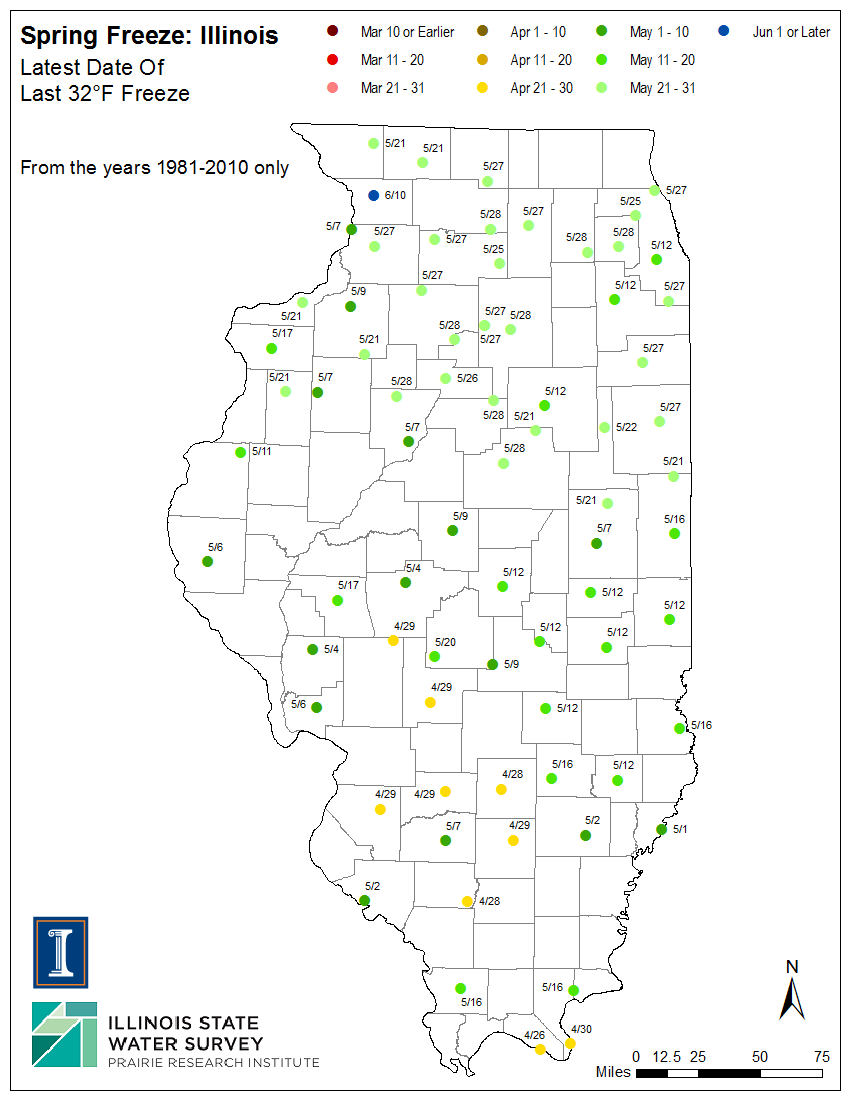
Established trees — in the ground three or more years — are more drought-tolerant than most people realize. In a normal Illinois spring, they need very little help.

Water when: no significant rain for two or more weeks, leaves are curling or browning at the edges, or the tree was planted in the last 1–2 years.

Stop when: the soil 2–3 inches down is already moist, rain is coming in the next day or two, or you’re seeing any of the overwatering signs above.

When you do water — water at the drip line, not the trunk. Deep and slow, once a week. Not a little every day.

Our ISA-certified arborists assess tree health and catch issues early.

Advanced Tree Care — Cook & Lake County Free estimates: 847-587-8500

Filed Under: Advanced TreeCare Tips, Preventive Tree Maintenance, Tree Inspection, Tree Pruning, Uncategorized

When to Call for Tree Removal in Chicagoland

March 27, 2026 by Sofiia Protasova

If you’ve recently searched for tree removal near you, chances are you’re dealing with a tree that doesn’t look quite right. Across Chicagoland—especially in Cook County and Lake County—changing weather patterns and strong storms can quickly turn a damaged tree into a serious hazard. Knowing when to call a professional tree removal company can help you avoid costly damage and keep your property safe.

sick maple tree before professional removal in Chicagoland

Why Homeowners Look for Tree Removal Help

Trees in Northeast Illinois go through a lot: heavy snow, ice, strong winds, and summer storms. Over time, even healthy trees can become unstable. Many homeowners start looking for local tree removal services after noticing warning signs or storm damage around their home.

At Advanced Tree Care, we specialize in safe, professional tree removal throughout Cook County and Lake County, helping homeowners make informed decisions about their trees.

Signs You May Need Tree Removal

1. Root damage or instability
If roots are circling the trunk or lifting from the ground, the tree may be unstable. This is a common issue with maples and poplars in the Chicagoland area and often leads people to call for tree removal before the tree falls.

2. Cracks or decay in the trunk
A strong trunk is essential for stability. If you see cracks, hollow areas, mushrooms, or other fungus, it may be time to consider professional tree removal in Chicagoland before the next storm hits.

3. Weak or splitting branches
Large branches with narrow angles or visible splits can break suddenly. This is especially common in fast-growing species like silver maples and willows found throughout Cook and Lake Counties.

4. Storm damage
After severe weather, trees that are leaning, partially uprooted, or have hanging limbs should be evaluated immediately. These situations require prompt attention from trained tree removal professionals.

5. Insects or disease
Infestations and disease can weaken a tree from the inside out. If left untreated, the damage can spread to nearby trees, making removal the safest option for your Cook County or Lake County property.

Local Tree Removal You Can Trust

When you need reliable tree removal in your area, Advanced Tree Care is proud to serve homeowners across Chicagoland. Our certified arborists provide expert assessments, safe removals, professional tree trimming, stump grinding, plant health care, and emergency services when you need them most.

We’ve built our reputation on dependable tree services throughout Cook County and Lake County, helping local communities maintain safe and healthy landscapes. If you’re concerned about a tree on your property, contact Advanced Tree Care today to schedule an inspection or tree removal service you can trust.

Filed Under: Advanced TreeCare Tips, Preventive Tree Maintenance, Tree Inspection, Tree Pruning, Uncategorized

Selecting a Tree Service Near You in Illinois

February 20, 2026 by Sofiia Protasova

While most homeowners wait for the warmth of spring to think about their landscaping, dormant pruning(pruning during late winter) is actually the most critical step you can take for the long-term health of your trees.

At Advanced Tree Care, we specialize in structural pruning during the winter months to ensure your canopy is resilient, healthy, and ready for a vibrant spring flusLate winter and early spring are some of the most important times of year for tree care in Illinois. Perhaps a winter storm has whipped through and your tree sustained serious damage. Or maybe it’s been declining for years, and you’ve decided it’s finally time to address the issue before spring growth begins.

Whatever the reason, many homeowners start their search with phrases like “tree trimming near me” or “tree service near me.” While proximity matters, choosing the right professional tree trimming service is even more important. 

Tree trimming and removal can be complex—and mistakes can be costly. Selecting an experienced, professional tree service led by a certified arborist helps protect your property, your safety, and the long-term health of your trees. 


What Should You Look For When Selecting a Tree Trimming Service?

Choose a Tree Trimming Service Led by a Certified Arborist

Proper tree care requires significant training, knowledge, and hands-on experience. A certified arborist understands tree biology, structural integrity, and the safest methods for trimming or removal.

When searching for a certified arborist in Illinois, look for a company that can assess whether a tree truly needs removal or if strategic pruning can preserve its health and stability. A tree trimming service led by a certified arborist—such as Advanced Tree Care—provides comprehensive, informed care rather than quick fixes.

Ensure the Tree Trimming Service Is Licensed, Bonded, and Insured

Tree work carries inherent risks. If something goes wrong, the responsibility should never fall on the homeowner.

Any professional tree service near you should be fully licensed, bonded, and insured. This protects you from liability and ensures the company meets industry and safety standards. Advanced Tree Care maintains proper licensing, bonding, and insurance so our clients can have peace of mind throughout every project.

Pick a Tree Trimming Service That Serves Your Area

When homeowners search for “tree service near me,” search results typically favor companies that clearly define their service area.

Tree trimming services operate within specific geographic regions, especially during busy seasons. Advanced Tree Care proudly serves multiple counties across Illinois, allowing us to respond efficiently to routine pruning needs as well as storm-related emergencies throughout the region.

Choose a Tree Service Known for Excellent Customer Care

Tree trimming is more than a technical service—it’s also a customer experience.

Choose a tree trimming service that:

  • Answers calls promptly
  • Shows up when scheduled
  • Communicates clearly
  • Completes work safely and thoroughly
  • Leaves your property clean and restored

This level of reliability is especially important in late winter and early spring, when snow, ice, and wind damage can create urgent safety concerns. At Advanced Tree Care, customer service is a core part of how we operate.

Select a Tree Trimming Service That Uses Modern Technology

Today’s professional tree trimming services rely on advanced equipment and arborist technology to improve safety, efficiency, and results.

Modern tools allow certified arborists to:

  • Perform precise pruning
  • Reduce impact on surrounding landscapes
  • Improve crew safety
  • Complete projects more efficiently

At Advanced Tree Care, we equip our staff with cutting-edge arborist tools and technology to ensure high-quality tree trimming, tree removal, and ongoing tree maintenance services.

Professional Tree Trimming and Tree Removal in Illinois

Advanced Tree Care combines top-tier equipment, innovative technology, and highly trained staff to provide expert tree trimming, tree removal, and emergency tree services throughout Illinois.

If you’re researching tree trimming near you, tree removal, or need guidance from a certified arborist, our team is always available to answer questions and help you determine the best course of action for your property.

Advanced Tree Care isn’t just our name—it’s our purpose.

Filed Under: Advanced TreeCare Tips, Preventive Tree Maintenance, Tree Inspection, Tree Pruning, Uncategorized

Winter Pruning: Why Timing Matters for Your Trees

January 2, 2026 by Sofiia Protasova

While most homeowners wait for the warmth of spring to think about their landscaping, dormant pruning(pruning during late winter) is actually the most critical step you can take for the long-term health of your trees.

At Advanced Tree Care, we specialize in structural pruning during the winter months to ensure your canopy is resilient, healthy, and ready for a vibrant spring flush.


Why Winter is the “Golden Window” for Pruning

Pruning while a tree is dormant isn’t just convenient—it’s scientifically superior for several reasons:

Reduced Stress: Because the tree isn’t actively putting energy into leaf production, it handles the “shock” of pruning much better than it would in June or July.

Maximum Visibility: Without leaves, our certified arborists can see the “bones” of the tree. This allows us to easily identify structural defects, crossed branches, or hidden decay that is obscured in the summer.

Faster Healing: Pruning in late winter allows the tree to begin the sealing process immediately when the spring growth surge hits, minimizing the time the “wound” is exposed.

Disease Prevention: Many pests and fungi (like Oak Wilt or Dutch Elm Disease) are dormant in the winter. Pruning now significantly reduces the risk of infection.

Selecting the Right Professional for the Job

As noted in our previous guides, tree care is complex. Winter pruning, specifically structural pruning, requires a high level of expertise. When selecting a service this season, ensure they meet these professional standards:

FeatureWhy It Matters for You
Certified ArboristsPruning is a science. Our team at Advanced Tree Care understands tree biology, ensuring cuts are made to promote health, not just “clear space.”
Licensed & InsuredWinter conditions can be unpredictable. We are fully bonded and insured to protect your property and our crew from any liability.
Advanced TechnologyWe utilize the latest arborist tools and communication tech to provide efficient, safe, and precise service, even in harsh weather.
Regional ExpertiseServing 3 counties in Chicagoland, we understand the specific climate stressors affecting local species during the winter months.

The Advanced Tree Care Difference

We don’t just “cut branches.” We utilize a combination of top-notch equipment and well-trained staff to restore your property to tip-top shape. From 24-hour emergency removals to strategic seasonal maintenance, Advanced Tree Care isn’t just our name—it’s our purpose.


Filed Under: Advanced TreeCare Tips, Preventive Tree Maintenance, Tree Inspection, Tree Pruning, Uncategorized

Avoiding “Tree-Mergencies” in 2025: Your Essential Guide to Preventive Tree Maintenance

November 25, 2025 by admin

preventive tree maintenance
Winter tree maintenance is a vital component to a comprehensive preventive tree maintenance plan for your trees.

As the beautiful colors of fall give way to the challenging weather of winter, homeowners in Chicagoland need to shift their focus to preventive tree maintenance. This proactive care is the single best investment you can make to safeguard your property and trees against the destructive forces of winter storms, heavy snow, and high winds.

Don’t wait for a crisis! Investing in maintenance now can prevent a costly and stressful “tree-mergency“—which often means avoiding the expense and heartache of an emergency tree removal in the middle of a blizzard.

At Advanced Tree Care, we are committed to helping property owners maintain strong, healthy, and safe trees throughout our nine-county service area. Here are our top professional tips for essential autumn and early winter tree care.


Preventive Tree Care: 5 Essential Steps

1. Prioritize Tree Inspection and Risk Assessment

A professional tree inspection is the cornerstone of any effective maintenance plan. This is not just a quick look—it’s a detailed risk assessment by a certified arborist.
Use this homeowner checklist as a starting point:
● Check for Leaning: Is the tree upright, or is it showing a noticeable, sudden lean? This can indicate compromised roots.
● Identify Root Damage: Look for signs of damage, decay, or significant soil erosion around the root flare (the base where the trunk meets the ground).
● Evaluate Proximity Hazards: Are any branches dangerously close to your roofline, siding, chimney, or utility lines/cables? These are prime candidates for damage during ice storms.
● Scan for Structural Defects: Inspect the junctions between major branches and the trunk for cracks, splits, or fractures. These structural issues are weak points that can fail under snow load.
● Review Canopy Health: Did the tree’s leaves show any unusual discoloration, early dropping, or thinning this past season? This can signal underlying health problems.

💡 Arborist Tip: If you have any doubt about the structural integrity of a large tree,
hire a licensed arborist immediately. Early detection of a hazard can save your
home.

2. Strategic Winter Tree Pruning & Deadwood Removal

preventive tree maintenance
Looking for damage around the base of your trees, regardless of age, is a necessary component of any preventive maintenance inspection.

Late fall and early winter are the optimal times for tree pruning because most trees are entering dormancy.
● Hazard Mitigation: We strategically trim branches to ensure clearance from structures and power lines. Pruning eliminates potential leverage points for wind and ice damage.
● Deadwooding for Health: Decaying deadwood is a magnet for pests, wood-boring insects, and harmful fungi. Removing it now helps prevent the spread of disease to the healthy parts of the tree, strengthening it for winter stress.
● Aesthetic Pruning: Dormancy pruning also allows us to shape the tree, promoting a strong and aesthetically pleasing structure once spring returns.

3. Essential Leaf Removal (Pest and Disease Control)

While tedious, thorough leaf removal is a non-negotiable part of winterizing your yard.
● Lawn & Root Health: A thick layer of wet leaves smothers your grass and retains moisture around the base of your trees.
● Pest and Disease Sanctuary: Rotting leaves provide a perfect, damp habitat for destructive tree pests (like certain borers) and fungal diseases. Clearing the leaves prevents these afflictions from migrating to the trunk and roots of your healthy trees. Ensure your lawn and planting beds are clear before the first snowfall.

4. Protect Young and Vulnerable Trees

Newly planted trees require extra defense during their first few harsh winters to develop a strong
root system.
● Staking and Support: New deciduous trees may need staking for their first season or two
to provide stability against strong winds.
● Trunk Protection: Consider tree wraps or fencing to protect the delicate bark of young trees from sunscald (cracking caused by temperature fluctuation) and damage from foraging wildlife like deer and rabbits. This simple step yields healthier, stronger trees for decades.

 5. Soil and Watering Preparation

Even as temperatures drop, a thorough watering before the ground freezes is critical, especially for evergreens, which continue to lose moisture through their needles. This process is called deep root watering. Ensuring the soil has adequate moisture going into winter helps prevent dehydration stress, especially during dry winter periods.


Choose Advanced Tree Care: We Work for Thoughtful
Homeowners

At Advanced Tree Care, we recognize that our best clients are Good Homeowners—those who view their properties not just as a place to live, but as a crucial future investment for themselves and their families. This perspective demands reliable, long-term care, not a quick fix.

We are not just a one-time service; we are your long-term tree management partner.

Unfortunately, many homeowners neglect the tree work in their yard until an emergency forces them to act. This reactive approach is costly, dangerous, and often avoidable.

Our mission is to allow you to forget about the worries of tree health and safety entirely. When you partner with us, you are not hiring a regular tree company that does the job once and forgets about you. You are building a relationship with a dedicated arborist team committed to multi-year, seasonal care. We proactively track the health of your trees, scheduling necessary maintenance—from tree trimming to risk assessments—so you don’t have to.

Invest in Advanced Tree Care, and invest in the long-term safety and value of your property.


Don’t Delay—Schedule Your 2025 Winter Prep Now!

Simple preventive maintenance in the late fall can dramatically buffer your trees against winter damage—and the resulting emergencies.


Advanced Tree Care combines the use of cutting-edge arborist technology, certified staff, and top-tier equipment to provide reliable and efficient tree care services. From proactive hazard assessments and professional tree trimming to rapid emergency tree removal, we are the trusted arborists across the Chicagoland area.


Our name is our purpose: Advanced Tree Care—providing unparalleled safety, expertise, and customer service to protect and beautify your property and community.

📞 Call us today at 847-587-8500 or visit Our Scheduling Page to schedule your comprehensive preventative maintenance consultation and secure your long-term partnership!


Filed Under: Advanced TreeCare Tips, Preventive Tree Maintenance, Tree Inspection, Tree Pruning, Uncategorized

  • 1
  • 2
  • 3
  • …
  • 6
  • Next Page »
  • Home
  • About
    • Service Locations
    • Customer Testimonials
    • Our Team
    • News
  • Our Customer Center
    • Pay Your Bill
    • Customer Login
    • Schedule a Quote
    • Verified Contractors
  • Services
    • Stump Grinding
    • Tree Trimming and Pruning
    • Tree Removal
    • Plant Health Care Services
    • Emergency Tree Care Services
  • Residential Tree Care Services
  • Commercial Tree Care Services
  • Contact Us
    • Schedule a Quote
  • Careers
600 Industrial Dr
Lincolnshire, IL 60069
(847) 587-8500

© 2026 Advanced TreeCare - All Rights Reserved — Design by 43Folders Technology Solutions, LLC