Advanced Tree Care Services

Tree care service at its best!

(847) 587-8500
  • Home
  • Contact Us
    • Schedule a Quote
  • Our Customer Center
    • Pay Your Bill
    • Customer Login
    • Schedule a Quote
    • Verified Contractors
  • Services
    • Tree Removal
    • Plant Health Care Services
    • Tree Trimming and Pruning
    • Stump Grinding
    • Emergency Tree Care Services
  • About
    • Service Locations
    • Customer Testimonials
    • Our Team
    • News
  • Careers

Selecting a Tree Service Near You in Illinois

February 20, 2026 by Sofiia Protasova

While most homeowners wait for the warmth of spring to think about their landscaping, dormant pruning(pruning during late winter) is actually the most critical step you can take for the long-term health of your trees.

At Advanced Tree Care, we specialize in structural pruning during the winter months to ensure your canopy is resilient, healthy, and ready for a vibrant spring flusLate winter and early spring are some of the most important times of year for tree care in Illinois. Perhaps a winter storm has whipped through and your tree sustained serious damage. Or maybe it’s been declining for years, and you’ve decided it’s finally time to address the issue before spring growth begins.

Whatever the reason, many homeowners start their search with phrases like “tree trimming near me” or “tree service near me.” While proximity matters, choosing the right professional tree trimming service is even more important. 

Tree trimming and removal can be complex—and mistakes can be costly. Selecting an experienced, professional tree service led by a certified arborist helps protect your property, your safety, and the long-term health of your trees. 


What Should You Look For When Selecting a Tree Trimming Service?

Choose a Tree Trimming Service Led by a Certified Arborist

Proper tree care requires significant training, knowledge, and hands-on experience. A certified arborist understands tree biology, structural integrity, and the safest methods for trimming or removal.

When searching for a certified arborist in Illinois, look for a company that can assess whether a tree truly needs removal or if strategic pruning can preserve its health and stability. A tree trimming service led by a certified arborist—such as Advanced Tree Care—provides comprehensive, informed care rather than quick fixes.

Ensure the Tree Trimming Service Is Licensed, Bonded, and Insured

Tree work carries inherent risks. If something goes wrong, the responsibility should never fall on the homeowner.

Any professional tree service near you should be fully licensed, bonded, and insured. This protects you from liability and ensures the company meets industry and safety standards. Advanced Tree Care maintains proper licensing, bonding, and insurance so our clients can have peace of mind throughout every project.

Pick a Tree Trimming Service That Serves Your Area

When homeowners search for “tree service near me,” search results typically favor companies that clearly define their service area.

Tree trimming services operate within specific geographic regions, especially during busy seasons. Advanced Tree Care proudly serves multiple counties across Illinois, allowing us to respond efficiently to routine pruning needs as well as storm-related emergencies throughout the region.

Choose a Tree Service Known for Excellent Customer Care

Tree trimming is more than a technical service—it’s also a customer experience.

Choose a tree trimming service that:

  • Answers calls promptly
  • Shows up when scheduled
  • Communicates clearly
  • Completes work safely and thoroughly
  • Leaves your property clean and restored

This level of reliability is especially important in late winter and early spring, when snow, ice, and wind damage can create urgent safety concerns. At Advanced Tree Care, customer service is a core part of how we operate.

Select a Tree Trimming Service That Uses Modern Technology

Today’s professional tree trimming services rely on advanced equipment and arborist technology to improve safety, efficiency, and results.

Modern tools allow certified arborists to:

  • Perform precise pruning
  • Reduce impact on surrounding landscapes
  • Improve crew safety
  • Complete projects more efficiently

At Advanced Tree Care, we equip our staff with cutting-edge arborist tools and technology to ensure high-quality tree trimming, tree removal, and ongoing tree maintenance services.

Professional Tree Trimming and Tree Removal in Illinois

Advanced Tree Care combines top-tier equipment, innovative technology, and highly trained staff to provide expert tree trimming, tree removal, and emergency tree services throughout Illinois.

If you’re researching tree trimming near you, tree removal, or need guidance from a certified arborist, our team is always available to answer questions and help you determine the best course of action for your property.

Advanced Tree Care isn’t just our name—it’s our purpose.

Filed Under: Advanced TreeCare Tips, Preventive Tree Maintenance, Tree Inspection, Tree Pruning, Uncategorized

Winter Pruning: Why Timing Matters for Your Trees

January 2, 2026 by Sofiia Protasova

While most homeowners wait for the warmth of spring to think about their landscaping, dormant pruning(pruning during late winter) is actually the most critical step you can take for the long-term health of your trees.

At Advanced Tree Care, we specialize in structural pruning during the winter months to ensure your canopy is resilient, healthy, and ready for a vibrant spring flush.


Why Winter is the “Golden Window” for Pruning

Pruning while a tree is dormant isn’t just convenient—it’s scientifically superior for several reasons:

Reduced Stress: Because the tree isn’t actively putting energy into leaf production, it handles the “shock” of pruning much better than it would in June or July.

Maximum Visibility: Without leaves, our certified arborists can see the “bones” of the tree. This allows us to easily identify structural defects, crossed branches, or hidden decay that is obscured in the summer.

Faster Healing: Pruning in late winter allows the tree to begin the sealing process immediately when the spring growth surge hits, minimizing the time the “wound” is exposed.

Disease Prevention: Many pests and fungi (like Oak Wilt or Dutch Elm Disease) are dormant in the winter. Pruning now significantly reduces the risk of infection.

Selecting the Right Professional for the Job

As noted in our previous guides, tree care is complex. Winter pruning, specifically structural pruning, requires a high level of expertise. When selecting a service this season, ensure they meet these professional standards:

FeatureWhy It Matters for You
Certified ArboristsPruning is a science. Our team at Advanced Tree Care understands tree biology, ensuring cuts are made to promote health, not just “clear space.”
Licensed & InsuredWinter conditions can be unpredictable. We are fully bonded and insured to protect your property and our crew from any liability.
Advanced TechnologyWe utilize the latest arborist tools and communication tech to provide efficient, safe, and precise service, even in harsh weather.
Regional ExpertiseServing 3 counties in Chicagoland, we understand the specific climate stressors affecting local species during the winter months.

The Advanced Tree Care Difference

We don’t just “cut branches.” We utilize a combination of top-notch equipment and well-trained staff to restore your property to tip-top shape. From 24-hour emergency removals to strategic seasonal maintenance, Advanced Tree Care isn’t just our name—it’s our purpose.


Filed Under: Advanced TreeCare Tips, Preventive Tree Maintenance, Tree Inspection, Tree Pruning, Uncategorized

Avoiding “Tree-Mergencies” in 2025: Your Essential Guide to Preventive Tree Maintenance

November 25, 2025 by admin

preventive tree maintenance
Winter tree maintenance is a vital component to a comprehensive preventive tree maintenance plan for your trees.

As the beautiful colors of fall give way to the challenging weather of winter, homeowners in Chicagoland need to shift their focus to preventive tree maintenance. This proactive care is the single best investment you can make to safeguard your property and trees against the destructive forces of winter storms, heavy snow, and high winds.

Don’t wait for a crisis! Investing in maintenance now can prevent a costly and stressful “tree-mergency“—which often means avoiding the expense and heartache of an emergency tree removal in the middle of a blizzard.

At Advanced Tree Care, we are committed to helping property owners maintain strong, healthy, and safe trees throughout our nine-county service area. Here are our top professional tips for essential autumn and early winter tree care.


Preventive Tree Care: 5 Essential Steps

1. Prioritize Tree Inspection and Risk Assessment

A professional tree inspection is the cornerstone of any effective maintenance plan. This is not just a quick look—it’s a detailed risk assessment by a certified arborist.
Use this homeowner checklist as a starting point:
● Check for Leaning: Is the tree upright, or is it showing a noticeable, sudden lean? This can indicate compromised roots.
● Identify Root Damage: Look for signs of damage, decay, or significant soil erosion around the root flare (the base where the trunk meets the ground).
● Evaluate Proximity Hazards: Are any branches dangerously close to your roofline, siding, chimney, or utility lines/cables? These are prime candidates for damage during ice storms.
● Scan for Structural Defects: Inspect the junctions between major branches and the trunk for cracks, splits, or fractures. These structural issues are weak points that can fail under snow load.
● Review Canopy Health: Did the tree’s leaves show any unusual discoloration, early dropping, or thinning this past season? This can signal underlying health problems.

💡 Arborist Tip: If you have any doubt about the structural integrity of a large tree,
hire a licensed arborist immediately. Early detection of a hazard can save your
home.

2. Strategic Winter Tree Pruning & Deadwood Removal

preventive tree maintenance
Looking for damage around the base of your trees, regardless of age, is a necessary component of any preventive maintenance inspection.

Late fall and early winter are the optimal times for tree pruning because most trees are entering dormancy.
● Hazard Mitigation: We strategically trim branches to ensure clearance from structures and power lines. Pruning eliminates potential leverage points for wind and ice damage.
● Deadwooding for Health: Decaying deadwood is a magnet for pests, wood-boring insects, and harmful fungi. Removing it now helps prevent the spread of disease to the healthy parts of the tree, strengthening it for winter stress.
● Aesthetic Pruning: Dormancy pruning also allows us to shape the tree, promoting a strong and aesthetically pleasing structure once spring returns.

3. Essential Leaf Removal (Pest and Disease Control)

While tedious, thorough leaf removal is a non-negotiable part of winterizing your yard.
● Lawn & Root Health: A thick layer of wet leaves smothers your grass and retains moisture around the base of your trees.
● Pest and Disease Sanctuary: Rotting leaves provide a perfect, damp habitat for destructive tree pests (like certain borers) and fungal diseases. Clearing the leaves prevents these afflictions from migrating to the trunk and roots of your healthy trees. Ensure your lawn and planting beds are clear before the first snowfall.

4. Protect Young and Vulnerable Trees

Newly planted trees require extra defense during their first few harsh winters to develop a strong
root system.
● Staking and Support: New deciduous trees may need staking for their first season or two
to provide stability against strong winds.
● Trunk Protection: Consider tree wraps or fencing to protect the delicate bark of young trees from sunscald (cracking caused by temperature fluctuation) and damage from foraging wildlife like deer and rabbits. This simple step yields healthier, stronger trees for decades.

 5. Soil and Watering Preparation

Even as temperatures drop, a thorough watering before the ground freezes is critical, especially for evergreens, which continue to lose moisture through their needles. This process is called deep root watering. Ensuring the soil has adequate moisture going into winter helps prevent dehydration stress, especially during dry winter periods.


Choose Advanced Tree Care: We Work for Thoughtful
Homeowners

At Advanced Tree Care, we recognize that our best clients are Good Homeowners—those who view their properties not just as a place to live, but as a crucial future investment for themselves and their families. This perspective demands reliable, long-term care, not a quick fix.

We are not just a one-time service; we are your long-term tree management partner.

Unfortunately, many homeowners neglect the tree work in their yard until an emergency forces them to act. This reactive approach is costly, dangerous, and often avoidable.

Our mission is to allow you to forget about the worries of tree health and safety entirely. When you partner with us, you are not hiring a regular tree company that does the job once and forgets about you. You are building a relationship with a dedicated arborist team committed to multi-year, seasonal care. We proactively track the health of your trees, scheduling necessary maintenance—from tree trimming to risk assessments—so you don’t have to.

Invest in Advanced Tree Care, and invest in the long-term safety and value of your property.


Don’t Delay—Schedule Your 2025 Winter Prep Now!

Simple preventive maintenance in the late fall can dramatically buffer your trees against winter damage—and the resulting emergencies.


Advanced Tree Care combines the use of cutting-edge arborist technology, certified staff, and top-tier equipment to provide reliable and efficient tree care services. From proactive hazard assessments and professional tree trimming to rapid emergency tree removal, we are the trusted arborists across the Chicagoland area.


Our name is our purpose: Advanced Tree Care—providing unparalleled safety, expertise, and customer service to protect and beautify your property and community.

📞 Call us today at 847-587-8500 or visit Our Scheduling Page to schedule your comprehensive preventative maintenance consultation and secure your long-term partnership!


Filed Under: Advanced TreeCare Tips, Preventive Tree Maintenance, Tree Inspection, Tree Pruning, Uncategorized

Show Your Trees Some Love With a Little Pruning

February 19, 2024 by admin

It’s the month of love, a time to express your love and appreciation for your family, friends, and trees! Trees are MVPs. They provide shade, oxygen, and beauty, while creating healthy habitats for the wildlife in our yards that we enjoy watching—we would enjoy life a lot less without them.

Your trees do so much for you, why not spend some time showing your trees some love this month? How can you do that? By pruning!

Why do you need to prune your trees? You prune to:

● Remove diseased or damaged limbs. Damaged and diseased limbs drain valuable energy and resources away from the healthy parts of the tree. Removing them spares the tree from further damage or infection.
● Control the size and shape of your tree. Keeping your trees strong and balanced protects your property from potential damage caused by breaking limbs. Properly shaping your tree will also ensure that you don’t have overgrown tree limbs interfering with power lines, buildings, or vehicles.
● Encourage new growth. With the growing season beginning in several weeks, removing unnecessary limbs or branches frees your tree to expend all its energy in creating new, healthy growth and beautiful foliage.
● Prepare your trees for spring showers and storms. Thunderstorms and strong winds can take a toll on trees with damaged limbs. Limbs that split off a tree expose it to disease, fungus, and insect invasion, not to mention the damage falling limbs can cause to the rest of your property.

Pruning is vital to maintaining your tree’s health, and pruned trees will be stronger, healthier, and more beautiful. February is the ideal time to prune your trees as most deciduous trees (trees that lose their leaves at the end of the growing season) are still dormant, and the lack of foliage makes it easy to determine where to prune.

How do you prune your trees? Here are a few things to keep in mind as you get started.

● Less is more. Remember, you can always cut more in the future, but you cannot put the severed limbs and branches back on. Take your time and think through what you really want to prune before you make the cut. You can also research pruning based on your tree’s type, age, size, and your growing region.
● Prune low-hanging branches. Low-hanging branches can eventually reach the ground, which raises the risk of damage from disease or pests. It can also create hazards for your property, and these branches can be more susceptible to damage in storms. You’ll want to cut these branches once they reach about an inch in diameter, and definitely before they touch the ground.
● Remove crossed branches. Branches that grow back toward the trunk or cross other branches can cause damage to your tree by chafing the bark and exposing the tree to disease and insects. Branches that grow at awkward angles also have weaker joints and are more easily broken off in storms. Remove these to give your tree trunk plenty of space, ensuring the tree’s limbs and branches can all move and grow freely.
● Get rid of suckers. Suckers are the long shoots that grow out of the base of the tree or from the roots; they are an energy drain on your tree. Removing them will not only make your tree look better, but it will function better as well.

If you are concerned about pruning on your own, you can contact a licensed arborist for expert advice on pruning. For larger pruning jobs that require heavier equipment, contact a professional tree care service that can do the job safely.

Our trees are always giving to us—shady backyard picnics, bird watching, or brilliant fall colors—it’s only right that we pay it back by giving them what they need to thrive and be healthy. Show your tree a little love this month with some pruning!

Looking for advice on how to prune your trees? We can help. Advanced Tree Care combines top-notch equipment, cutting-edge technology, and well-trained staff to provide emergency tree removal and tree maintenance services. With a presence in nine counties and two states, we work daily to provide unparalleled customer service, safety, and efficiency—as well as the expertise to beautify your landscaping and community. Advanced Tree Care isn’t just our name—it’s also our purpose!

Filed Under: Tree Pruning

Plant Health Care Tips for Spring

April 4, 2023 by admin

At long last, it’s spring! Many of us have eagerly awaited the growing season, especially over the long, cold winter months. If you’re ready to get your yard ready for warmer days, this guide is for you.

Know your zone

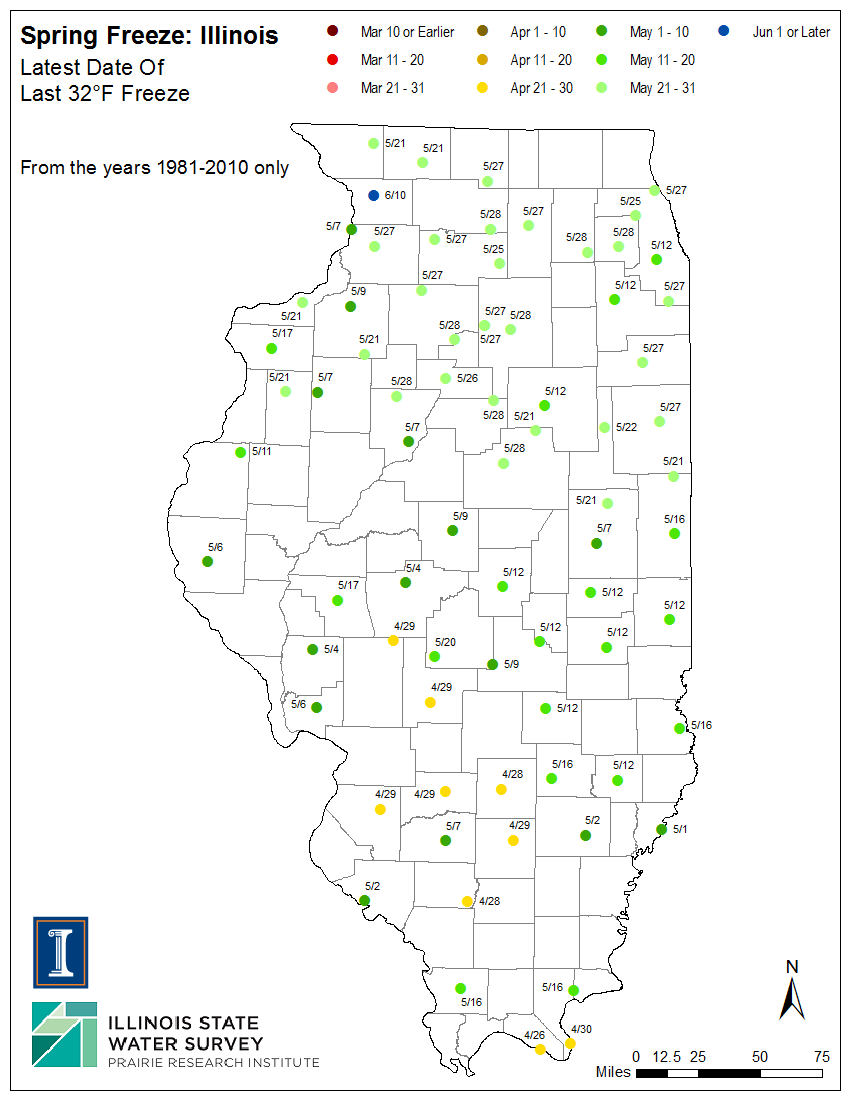
Let’s start with a note about spring in the Midwest: as you probably already know, it can be fickle. It’s essential to know your planting zone. The US Department of Agriculture created a 13-zone Hardiness Zone Map, which helps to guide gardeners and plant professionals on when and what to plant based on where they live. Most of Northern Illinois is Zone 5B, with a frost-free date of May 1-10 and a first frost date of September 21-30. These are averages, so it’s also wise to check the Illinois Water Survey’s map of the latest spring frost dates. (Not in Illinois? Check the Hardiness Zone Map above).

Spring tree care tips

Have trees on your property? They are already starting to come out of dormancy if they are deciduous (or lose their leaves each fall). This starts as early as February, as the trees prepare for the growing season ahead. You’ll first notice small buds, then early leaf growth, and then (typically in later April and early May) the trees in full flower. 

Early spring is a great time to check on tree health with these tips: 

  • Inspect your trees before they leaf out. Look for cracked, broken, or diseased branches—and prune them to protect your trees and property. 
  • Were any of your trees damaged by winter storms, snow, or ice? If so, early spring is a good time to remove them. Contact a certified arborist and tree care professionals. 
  • Adding to your landscape? Make plans to plant new trees on your property once weather permits, to give young trees time to grow and establish a strong root system

Fun fact: this year, Arbor Day is celebrated on Friday, April 28.  

Spring lawn care tips

Early spring is the ideal time to give your lawn a strong start to the season. Take the time to give your mower a tune-up if it has been sitting in the garage over the winter. 

A solid spring lawn care checklist includes: 

  • Clean-up, raking, and evaluating bare patches
  • Preparing and seeding the soil to address bare spots
  • Mow high early to give grass time to establish a healthy root system 
  • Fertilize at the time of the first mowing, and consider applying a 3-in-1 turf builder to control weed growth

See this article for more details on spring lawn care.

Spring garden tips

Do you have flowerbeds? Plant a vegetable garden or patio containers? You’ll want to make time to prepare these as well. 

After a long winter, you might need to edge and clean up your flowerbeds, and it’s easiest to do this when the soil is soft in the spring. Use a sharp-edged garden spade to redefine the borders. Examine perennials and shrubs for signs of damage over the winter. Apply mulch to a depth of 1-3” around the base of perennials and shrubs—but not on top of them. Be sure to include your trees in mulching too—but don’t pile mulch around the bark itself. Leave a couple of inches for the tree to breathe. Mulch suppresses weed growth and helps plants and trees retain moisture better in the hot months ahead.

For vegetable gardens, turn over the soil in early spring and consider adding enhancements like compost and manure. Cold-tolerant vegetables like carrots, lettuce, and beets can be sowed directly in the soil, even before the last frost date. For flowering plants like tomatoes and peppers, and most cutting flowers, wait until after the last frost date has passed. Containers can be planted and brought into the garage or other warmer zone during frost warnings. 

Spring houseplant care tips

Even your houseplants benefit from some spring plant care. Though they haven’t braved the outdoor extremes that many plants have, they have gone through a period of dormancy. Longer days and more hours of sunshine mean it’s time to up your watering frequency. Plants that have spent the summer on your windowsill might need to be moved away from direct sunlight so that their leaves don’t become yellowed or burnt. And just as you like turning your face up to the first warm rays, your houseplants do, too—so make plans to take them outside when it’s warm enough to do so. 

Looking to get your yard ready for spring? Advanced Tree Care can help. Advanced Tree Care combines top-notch equipment, cutting-edge technology, and well-trained staff to provide emergency tree removal and tree maintenance services. With a presence in nine counties and two states, we work daily to provide unparalleled customer service, safety, and efficiency—as well as the expertise to beautify your landscaping and community. Advanced Tree Care isn’t just our name—it’s also our purpose!


Filed Under: 24/7 Tree Removal Service, Advanced TreeCare Tips, Emergency Tree Removal Service, Preventive Tree Maintenance, Tree Inspection, Tree Pruning, Tree Services Near Me, Uncategorized Tagged With: certified arborist, chicago, emergency, Safety, safety tips, tree, tree care, Tree Services Near Me, tree trimming

  • 1
  • 2
  • 3
  • …
  • 6
  • Next Page »
  • Home
  • About
    • Service Locations
    • Customer Testimonials
    • Our Team
    • News
  • Our Customer Center
    • Pay Your Bill
    • Customer Login
    • Schedule a Quote
    • Verified Contractors
  • Services
    • Stump Grinding
    • Tree Trimming and Pruning
    • Tree Removal
    • Plant Health Care Services
    • Emergency Tree Care Services
  • Residential Tree Care Services
  • Commercial Tree Care Services
  • Contact Us
    • Schedule a Quote
  • Careers
600 Industrial Dr
Lincolnshire, IL 60069
(847) 587-8500

© 2026 Advanced TreeCare - All Rights Reserved — Design by 43Folders Technology Solutions, LLC